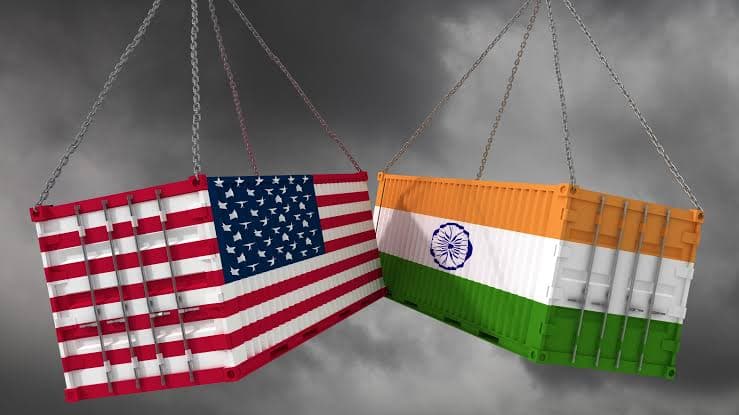
Whenever the world's primary economic superpowers—the United States, China, and the European Union—engage in tariff escalations and regulatory trade friction, the economic repercussions reverberate across global financial markets. Tariffs, export controls, and national security trade sanctions have transcended diplomatic negotiations to become direct determinants of consumer price indices and household purchasing power.
Across global commerce, the post-Cold War era of frictionless multilateral free trade has given way to economic nationalism, nearshoring, and targeted tariff barriers.
How does India position itself within this fractured global trading landscape, and what does this mean for domestic exporters, currency stability, and household budgets?
1. The Anatomy of Modern Tariff Warfare
A tariff is a direct statutory duty levied on imported foreign goods. While governments historically implemented tariffs to generate state revenue, modern protectionist tariffs are deployed to artificially inflate the retail price of foreign goods, thereby sheltering domestic manufacturing from lower-cost overseas competitors.
However, international trade operates on reciprocal retaliation. When one nation imposes border duties on automotive components or steel, affected trading partners respond with equivalent tariffs on agricultural staples, luxury goods, or industrial chemicals. This bilateral tit-for-tat fractures international supply chains and raises the structural baseline cost of intermediate inputs worldwide.
2. Dual Dynamics for Indian Industry: Risks vs. Structural Opportunities
For an emerging economy like India, heightened global tariff barriers generate distinct headwinds alongside rare geopolitical tailwinds:
| Export Sector | Direct Impact & Vulnerability | Structural Mitigation / Strategic Opportunity |
|---|---|---|
| Information Technology & SaaS | Border frictions on digital services; restrictive H-1B visa policies | Transition to high-value AI architecture and Global Capability Centers (GCCs) |
| Textiles & Ready-Made Garments | Direct tariff competition against Bangladesh and Vietnam in Western retail markets | Bilateral FTAs with the UK, EU, and Australia; modernization incentives |
| Pharmaceuticals & Active Ingredients | Scrutiny over regulatory compliance and API supply-chain origin | Deepening domestic API synthesis via Production Linked Incentive (PLI) schemes |
| Electronics & Smartphone Assembly | Vulnerability to imported display panel and semiconductor tariffs | Capitalizing on the "China+1" diversification of global hardware assembly |
The Strategic "China+1" Influx
As multinational conglomerates seek to de-risk manufacturing footprints away from single-country concentrations in East Asia, India has emerged as a premier beneficiary. Substantial policy interventions—most notably the Production Linked Incentive (PLI) schemes spanning electronics, renewable energy hardware, and specialized pharmaceuticals—have successfully attracted global manufacturing investments from the likes of Apple and Samsung.
3. Transmission Mechanisms into Household Budgets
International macroeconomic conflicts are not abstract diplomatic games; they transmit directly into retail domestic prices through three distinct channels:
A. Imported Energy Volatility
India imports over 85% of its crude oil requirements. When geopolitical trade standoffs disrupt maritime transit corridors or trigger energy embargoes, global crude benchmarks rise. Because petroleum products serve as the baseline input for domestic logistics, elevated fuel costs rapidly filter into food prices, vegetable logistics, and public transport fares.
B. Component Inflation in Consumer Durables
Modern consumer electronics—smartphones, laptops, air conditioners, and automobiles—rely on intricate global supply chains spanning Taiwan (chips), South Korea (screens), and Japan (sensors). When tariffs increase component landing costs, consumer electronics brands pass price increases directly onto retail consumers.
C. Employment Pressures in Export Clusters
Export-intensive sectors such as gems and jewellery (Surat), textile spinning (Tirupur), and leather handicrafts (Agra) employ millions of semi-skilled workers. Prolonged overseas demand contractions lead to reduced corporate overtime, hiring freezes, and subdued wage growth across these manufacturing belts.
4. India's Strategic Policy Response
To insulate the domestic economy while expanding global trade share, policymakers are executing a focused, multi-pronged economic doctrine:
- Pragmatic Bilateral Trade Agreements: Moving away from broad multilateral pacts in favor of targeted, mutually beneficial Free Trade Agreements (such as agreements signed with the UAE, Australia, and EFTA nations).
- Deepening Domestic Value Addition: Transitioning from simple final-stage assembly to full domestic component manufacturing, reducing reliance on imported capital goods.
- Currency Diversification: Promoting rupee-denominated trade invoicing (Vostro accounts) with bilateral trade partners to reduce structural vulnerability to US Dollar liquidity crunches.
Summary
Global trade wars represent a double-edged sword for developing economies. While rising protectionism poses undeniable threats to export volumes and retail price stability, it simultaneously accelerates the global reallocation of manufacturing capacity. For India, maintaining fiscal discipline, executing domestic ease-of-doing-business reforms, and strengthening industrial infrastructure remain the ultimate safeguards in an increasingly fragmented global economy.